

The story of the negro spirituals is closely linked to the History of African Americans, with its three milestones:
1865: the abolition of slavery
1925:the Black Renaissance
1985: the first Dr Martin Luther King’s Day.
Before 1865
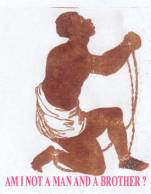
Almost all the first Africans who arrived in the New World were slaves. They
came from several regions of the African West Coast.
Their ways of living were described by slaves themselves, in some narratives.
They had to work either in plantations
or in town.
Slavery
was an important issue facing Churches, as slaves were allowed to
meet for Christian services. Some Christian ministers, such as J.
D. Long, wrote against slavery.
Rural
slaves used to stay after the regular worship services, in churches
or in plantation “praise houses”, for singing and dancing. But,
slaveholders did not allow dancing and playing drums, as usual in
Africa. They also had meetings at secret places (“camp meetings”,
“bush meetings”), because they needed to meet one another and share
their joys, pains and hopes. In rural meetings, thousands slaves
were gathered and listened to itinerant preachers, and sang spirituals,
for hours. In the late 1700s, they sang the precursors of spirituals,
which were called “corn ditties”.
So, in rural areas, spirituals were sung, mainly outside of churches. In cities, about 1850, the Protestant City-Revival Movement created a new song genre, which was popular; for revival meetings organized by this movement, temporary tents were erected in stadiums, where the attendants could sing.
At church, hymns and psalms were sung during services. Some of them were transformed into songs of a typical African American form: they are "Dr Watts”.
The lyrics of negro spirituals were tightly linked with the lives of their authors: slaves. While work songs dealt only with their daily life, spirituals were inspired by the message of Jesus Christ and his Good News (Gospel) of the Bible, “You can be saved”. They are different from hymns and psalms, because they were a way of sharing the hard condition of being a slave.
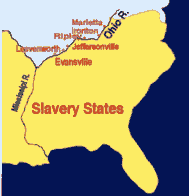
Many slaves in town and in plantations tried to run to a “free country”, that they called “my home” or “Sweet Canaan, the Promised Land”. This country was on the Northern side of Ohio River, that they called “Jordan”. Some negro spirituals refer to the Underground Railroad, an organization for helping slaves to run away.
NEGRO SPIRITUALS AND WORK SONGSDuring slavery and afterwards, workers were allowed to sing songs during their working time. This was the case when they had to coordinate their efforts for hauling a fallen tree or any heavy load. For example, prisoners used to sing "chain gang" songs, when they worked on the road or some construction. But some "drivers" also allowed slaves to sing "quiet" songs, if they were not apparently against slaveholders. Such songs could be sung either by only one or by several slaves. They were used for expressing personal feeling, and for cheering one another. |
NEGRO SPIRITUALS AND THE UNDERGROUND RAILROADThe Underground Railroad (UGRR) helped slaves to run to free a country. A fugitive could use several ways. First, they had to walk at night, using hand lights and moonlight. When needed, they walked (“waded”) in water, so that dogs could not smell their tracks. Second, they jumped into chariot, where they could hide and ride away. These chariots stopped at some “stations”, but this word could mean any place where slaves had to go for being taken in charge. So, negro spirituals like “Wade in the Water”, “The Gospel Train” and “Swing Low, Sweet Chariot” directly refer to the UGRR. |
Between 1865 and 1925
Slavery was abolished in 1865. Then, some African Americans were allowed to go to school and be graduated. At Fisk University, one of the first universities for African American, in Nashville (Tennessee), some educators decided to raise funds for supporting their institution. So, some educators and students made tours in the New World and in Europe, and sang negro spirituals (Fisk Jubilee Singers). Other Black universities had also singers of negro spirituals: Tuskegee Institute, etc.
Just after 1865, most of African Americans did not want to remember the songs they sung in hard days of slavery. It means that even when ordinary people sang negro spirituals, they were not proud to do so.
In the 1890s, Holiness and Sanctified churches appeared, of which was the Church of God in Christ. In these churches, the influence of African traditions was in evidence. These churches were heirs to shouts, hand clapping, foot-stomping and jubilee songs, like it was in plantation “praise houses”.
At the same time, some composers arranged negro spirituals in a new way, which was similar to the European classical music. Some artists, mainly choruses, went abroad (in Europe and Africa) and sang negro spirituals. At the same time, ministers like Charles A. Tindley, in Philadelphia, and their churches sang exciting church songs that they copyrighted.
Between 1925 and 1985
In the 1920s, the Black Renaissance was an artist movement concerning poetry and music. “It was an evidence of a renewed race-spirit that consciously and proudly sets itself apart”, explained Alan Locke. So, the use of dialect was taboo, in this movement. The “race-spirit” infused the work of musicians and writers like Langston Hughes. For the first time, African Americans realized that their roots were deep in the land of their birth.The Black Renaissance had some influence on the way of singing and interpreting negro spirituals. First, the historical meaning of these songs were put forward. Then, singers were pushed to be more educated.
For example, in early Twentieth century, boys used to sing negro spirituals in schoolyards. Their way of singing was not sophisticated. But educators thought that negro spirituals are musical pieces, which must be interpreted as such. New groups were formed, such as the Highway QC’s (QC : Quincy College), and sung harmonized negro spirituals
This constant improvement of negro spirituals gave birth to another type of Christian songs. Thesewere inspired by the Bible (mainly the Gospel) and related to the daily life. Thomas A. Dorsey was the first who composed such new songs. He called them Gospel songs, but some people say “Dorseys”. He is considered as being the Father of Gospel music.
It is of interest to see that, during this period, African Americans began to leave the South and went North. Then, Gospel songs were more and more popular in Northern towns, like Chicago.
Between 1915 and 1925, many African American singers, like Paul Robeson, performed either at church or on stage, or even in movies, then negro spirituals were considered mainly as traditional songs. In the late 1930s, Sister Rosetta Tharpe dared sing Gospel songs in a nightclub. This was the very start of singing Gospel songs in many kinds of places: churches, theaters, concert halls. The number of quartets was high, at that time.
At the same time, some preachers and their congregations were also famous; some of them recorded negro spirituals and Gospel songs. Ministers, like James Cleveland, made tours with their choruses, in the United States and abroad.
In the late 1950s and early 1960s, before and during rallies for Civil Rights, demonstrators sang negro spirituals. For example, “We Shall Overcome” and “This Little Light of Mine” were popular
After 1985
The first Dr Martin Luther King's Day was celebrated in 1985; it became a national holiday in 1992. This event is a milestone in the history of African American: it shows that the African American community is a part of the US nation. This Day is included in the month, when Black History is celebrated through various events.
Since that first King’s Day, Negro spirituals have been considered as being pieces of the American heritage. So, they are often in the programs of events reminding Black History.
It appears that today everyone may perform Gospel music in the United States. The main issue is to know how to improve the African American integrity in singing negro spirituals and other Christian songs.
Know more on HistoryMore on the history of slavery, click here Other documents about North American slaves “North American Slave Narratives” Know more on African American History, click here (MENC : National Association for Music Education) Facts of Black History, click here Some books to read Peter KOLCHIN, “American Slavery”, Penguin Books, London, New York, 1995 Joanna GRANT, « Black Protest. History, Documents and Analyses », Fawcett Premier, New York, 1968 Leon F. LITWACK “Trouble in Mind”, Vintage Books, New York, 1998 Robert S. STAROBIN, « Blacks in Bondage. Letters of American Slaves", Barnes and Noble Books, York, 1988 Benjamin QUARLES, « The Negro in the Making of America », A Touchstone Book Simon and Schuster Publ., 1996 Stephan THERNSTROM, Abigail THERNSTROM, « America in Black and White. One Nation Indivisible » A Touchstone Book Simon and Schuster Publ., 1999 |
This
section is organized
by
Spiritual Workshop, Paris
Mail
to:
question@negrospirituals.com
